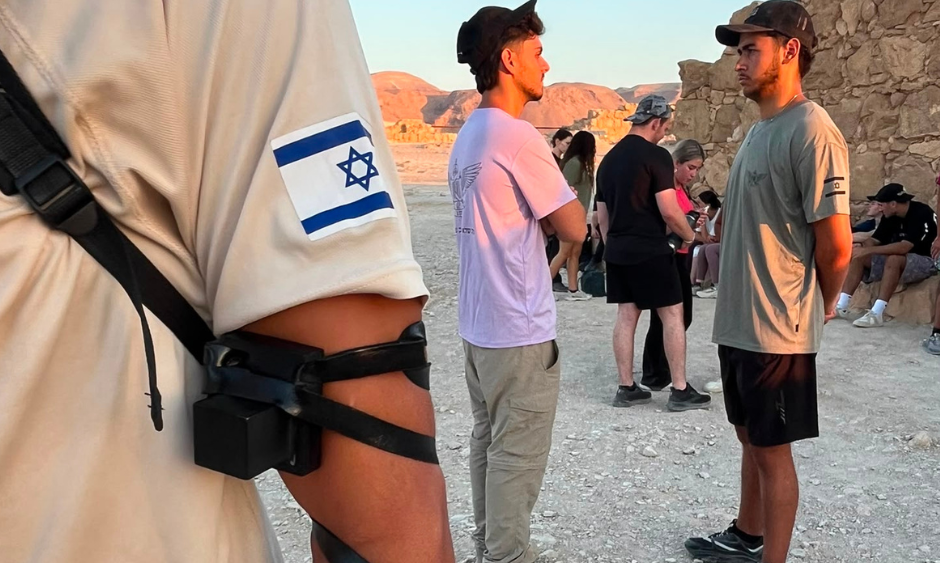
There’s a certain place in Israel, where I insist on wrapping my tfillin. I have to admit, It’s for the most unexpected and slightly ridiculous reason, and yet it’s the perfect excuse to do both a mitzvah, and my job as well, along the way.
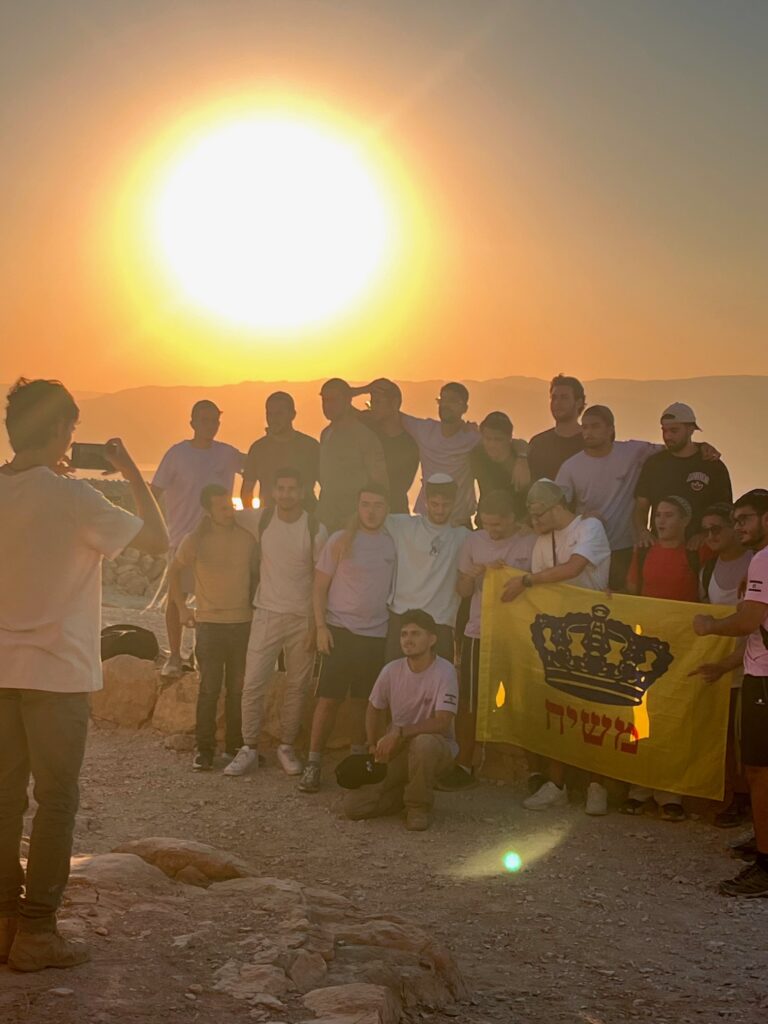
I love guiding on top of Mount Masada. There’s certain sites that pull at our heartstrings as Guides, and this is certainly one of them for me. There’s simply so much to talk about in a place, rich in stories and archaeology, battles, and final moments of bravery and glory. And yet as a touristic site, it’s rather boring, I have to admit.
A huge plateau in the middle of the desert in the scorching heat with walls and ruins and archaeological wonders that need a lot of proper explanation in order to animate them. And I happen to know just the right guy to do just that.
Indeed, the site is simply rather boring as far as I’m concerned, which leaves me a wonderful arena to extrapolate and to delve into one of the greatest confrontations of the ancient world. And yet, the story I love to tell is not the story of Augustus nor Josephus, not the Romans nor the SicariI Jewish rebelsl that lived as free men on Masada before the Roman war machine came for them.
The one that I love most to tell, is a story from the 1950s that tickles my fancy most when I’m upon this holy mountain of history.
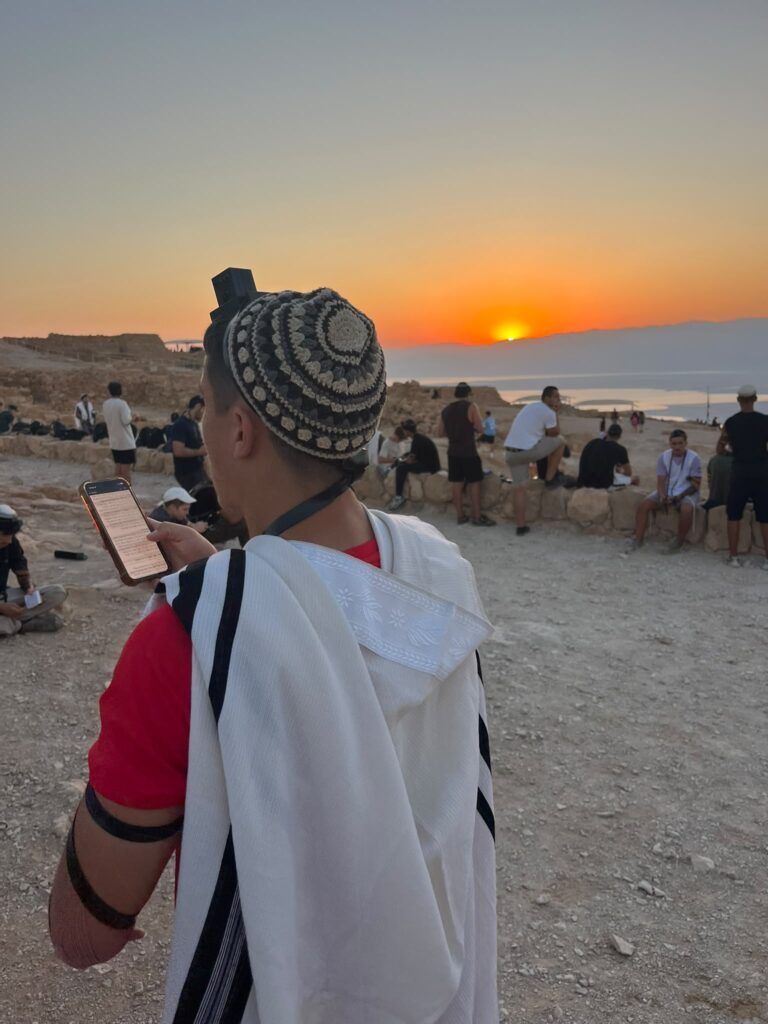
The story is that of a great Israeli general named Yigal Yadin, one of the great archaeologist in his post war career. As the story goes, Yadin is excavating on top of the mountain when a discovery is made by one of his students. Something amazing has been found under the dirt and the weight of centuries. He can’t believe his eyes and he goes rushing to Jerusalem with the artifact in a box, awaiting the awe struck faces from the parliament members when they see what he’s brought them.
Suddenly in the middle of his journey, there in the train, a strange encounter changes his whole reality. Yadin is stopped by a religious Jew asking if he wants to wrap tfilin as a mitzvah and a commandment. Yadin is captivated by the moment as the Russian accent of the religious Jew speaks to him and the two converse. One is a religious Russian Jew, asking others Jews if they want to put on tfillin. The other is a secular, anti-religious, Israel general, who can’t help but be intrigued by the Russian accent of the religious man, himself coming from a Russian background.
In the end, Yadin asks the man if he had completed this mitzva in Russia. To which the man responded, “yes, and when they broke my arms and threw me in prison, and broke my arms, and used me as an ashtray,I also put on my tfillin.” Yadin then honors the warrior inside this religious Jew and for the first time, maybe since his bar mitzvah, he puts on the holy straps with the Russian man.
A woman sitting on the train, observing quietly in the corner, smiles and thinks deeply of her husband who served bravely under Yadin‘s command who fell in battle some years earlier. She now sits, smiling as she observes the encounter. The last wish of her husband, the soldier, who fell bravely fighting for his homeland, was that his brother’s in combat would they themselves put on tfillin his name and in his memory.
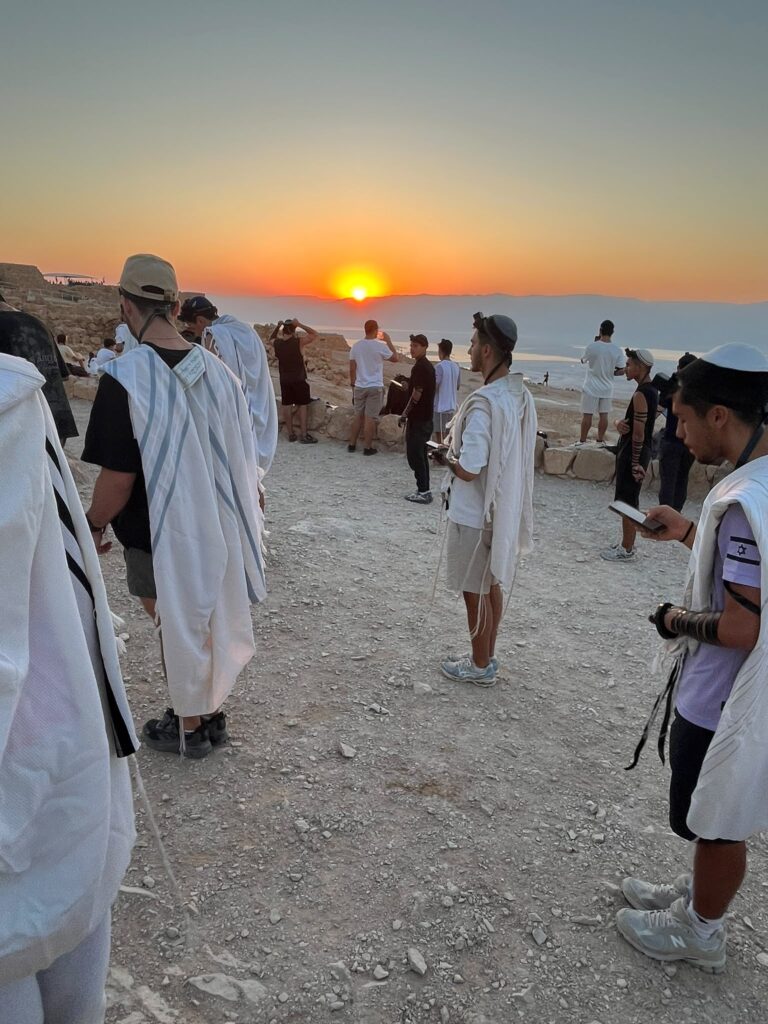
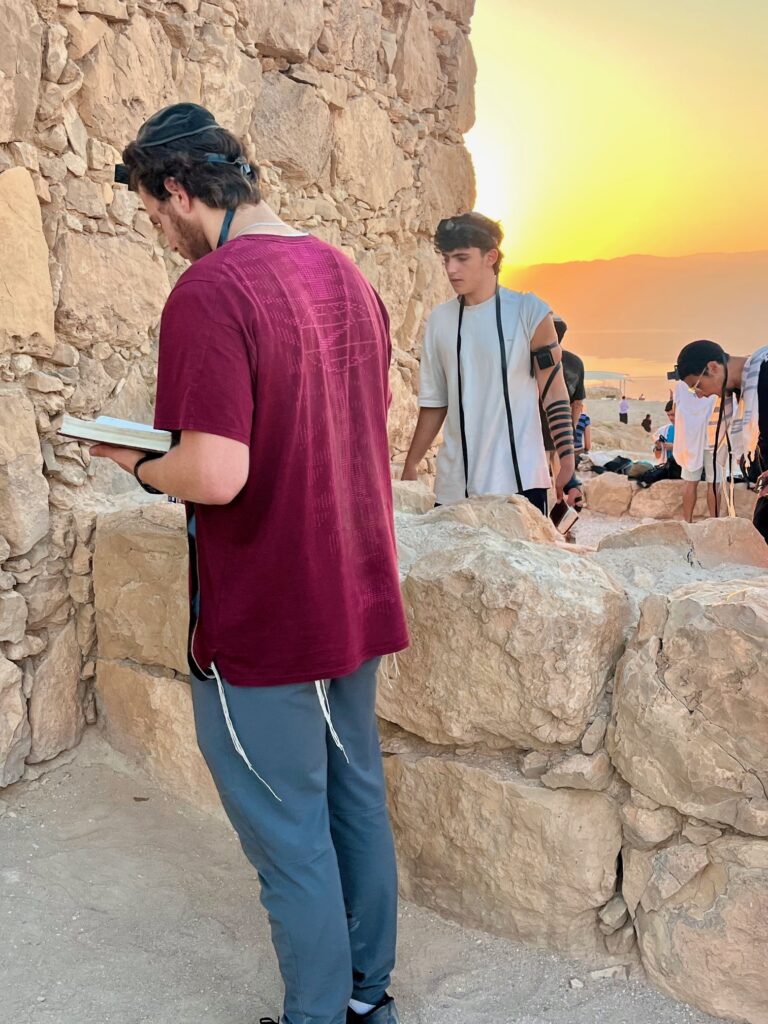
And as he stepped off the train, the woman took him by the arm and spoke softly to the general cardiologist. “That man has no idea you are the great general” she said softly. Yadin looked at her and said, “I had no idea, but they Russian Jews was in fact, a great Jewish warrior.”
The woman told Yadin of her fallen husband and his dying wish to his brothers in arms.
Suddenly a ‘chance’ interaction with a religious Jew, her fallen husband the soldier and his last wish, and now the general standing before her years later all come together in time. Then right there, as Yadin looks at the woman in the eyes, he opened the box that he’s been carrying and pulls out an ancient set of tfillin that had remained on top of Mount Masada for thousands of years; her eyes being amongst the first to witness them for nearly two millennia.
Maybe they were waiting for this living moment to reveal themselves to another set of eyes, or maybe these are the small miracles that happen every day here in the land of Israel, when the Jewish people are free.